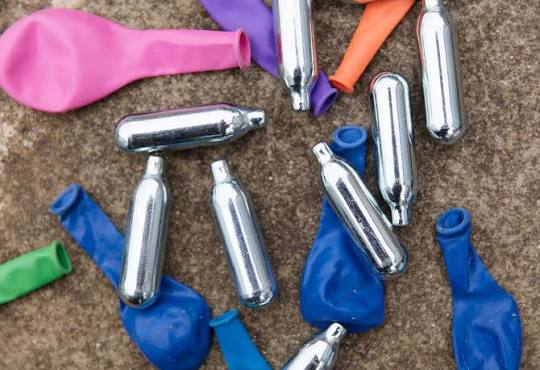
More young people in Ireland are experiencing spinal cord damage and lasting injuries from inhaling nitrous oxide; a new study has found. In recent years, more children and young people are abusing nitrous oxide by inhaling it, often using balloons.
Nitrous oxide, more commonly known as laughing gas or whippets, is legally sold for catering and industrial purposes. Their use can be found within the mechanisms for whipped cream canisters, as well as pain relief in medicine and dentistry. If nitrous oxide is illegally and improperly handled, as seen in cases of its inhalation as a growing trend, it can cause a range of health effects. Inhalation often makes users feel light-headed, whilst also causing headaches and loss of consciousness.
The destructive harm occurs when the drug interferes with the body’s ability to process vitamin B12, leading to a condition called subacute combined degeneration of the spinal cord (SACD). The study, which has brought into perspective these destructive side effects was led by consultant neuroradiologist at Beaumont Hospital, Seamus Looby. The study was also published in the American Journal of Neuroradiology, with Professor Looby observing that, “The rise in cases of spinal cord damage since the pandemic is alarming.”
He further stated that what happens is, “nitrous oxide is considered harmless, but it really isn’t.” 14 cases were diagnosed between 2021 and 2024 in Beaumont Hospital, with the median age of the patients being 20. Most of the patients in the study improved after treatment, but none fully recovered, and all of them were left with some lasting neurological damage. Between 2012 and 2020, no such cases were recorded in Beaumont Hospital. This speaks to the new-found trend of nitrous oxide consumption, yet its effects are not widely known but are innately deadly. Professor Looby hopes the study “prompts greater awareness and education on nitrous oxide’s potential for permanent, damaging effects”.
In other ways, the nitrous oxide trend has become increasingly visible within Customs and the laws of Ireland. Officials in Revenue & Customs are warning about growing evidence of the widespread use of nitrous oxide in Ireland. Revenue and Customs officials told Prime Time it is being brought into Ireland at scale by organised crime gangs and used nationwide. Until recently, it was typically sold amongst users in small 16- or 25-gram cartridges. However, seizures are now being made of truckloads of 600-gram-plus canisters of the gas.
Disposal of nitrous oxide canisters has also become a significant expense for Customs. Destroying pressurised metal canisters has cost €1.6 million over recent years, which covers only half the quantity seized.
In a local sense, Meath County Council have reported a serious increase in costs relating to the clean-up and disposal of nitrous oxide canisters. These costs are adding up to thousands of euros, with the minimum cost to dispose of one canister resting at €40. As for where this gas is consumed, it’s commonly used in car parks and industrial parks, which has raised concerns about road safety. Across Europe, nitrous oxide has been linked to thousands of road collisions. In particular, the Netherlands have introduced a national ban following thousands of recorded crashes involving the drug. Yet in Ireland, nitrous oxide is not tested for by Gardaí. This makes sense given the relatively new rise in its consumption, yet it raises further concerns within the precarious state that road safety is already in.
Furthermore, nitrous oxide is not controlled under the Misuse of Drugs Act and can be legally purchased for catering or medical use. Albeit it is illegal under the Psychoactive Drugs Act to sell or import it for ‘psychoactive’ purposes. On the issue of public access to nitrous oxide, the European Reach Committee stated that, “The undersigned associations representing the European cylinder makers and the private European waste management sector welcome the European Commission’s proposal for a REACH restriction on nitrous oxide (N2O).”
In Ireland, the “Sale of Nitrous Oxide and Related Products Bill 2025” is in its second stage in the Dáil as of April 2025. The Bill will seek to regulate and licence the sale of nitrous oxide to exempted purchasers, to prohibit the sale of nitrous oxide and nitrous oxide products to a person who has not attained the age of 18 years, and to provide for related matters. The outlook towards younger people is staunched in the view and reality that the age of people consuming the gas is largely within the teenage cohort. Youth workers who spoke to Prime Time say the drug is now deeply embedded in teenage culture.
In my view, I don’t disagree with the views and experiences of the youth workers, as I see their point. Young people may be drawn in by the concept of a ‘high’, by various means including alcohol, drugs and in this case, ‘laughing gas’. There are of course many restrictions and laws which prohibit access to drugs and alcohol to those under 18, or at all if they’re drugs.
As seen within this piece though, it’s clear that there are a lot less restrictions currently imposed on the obtainment and consumption of nitrous oxide for the psychedelic effect it can produce. The presence and subsequent consumption of nitrous oxide in Ireland is a growing issue, which has many loopholes that need to be closed and tightly regulated to protect public health for all.