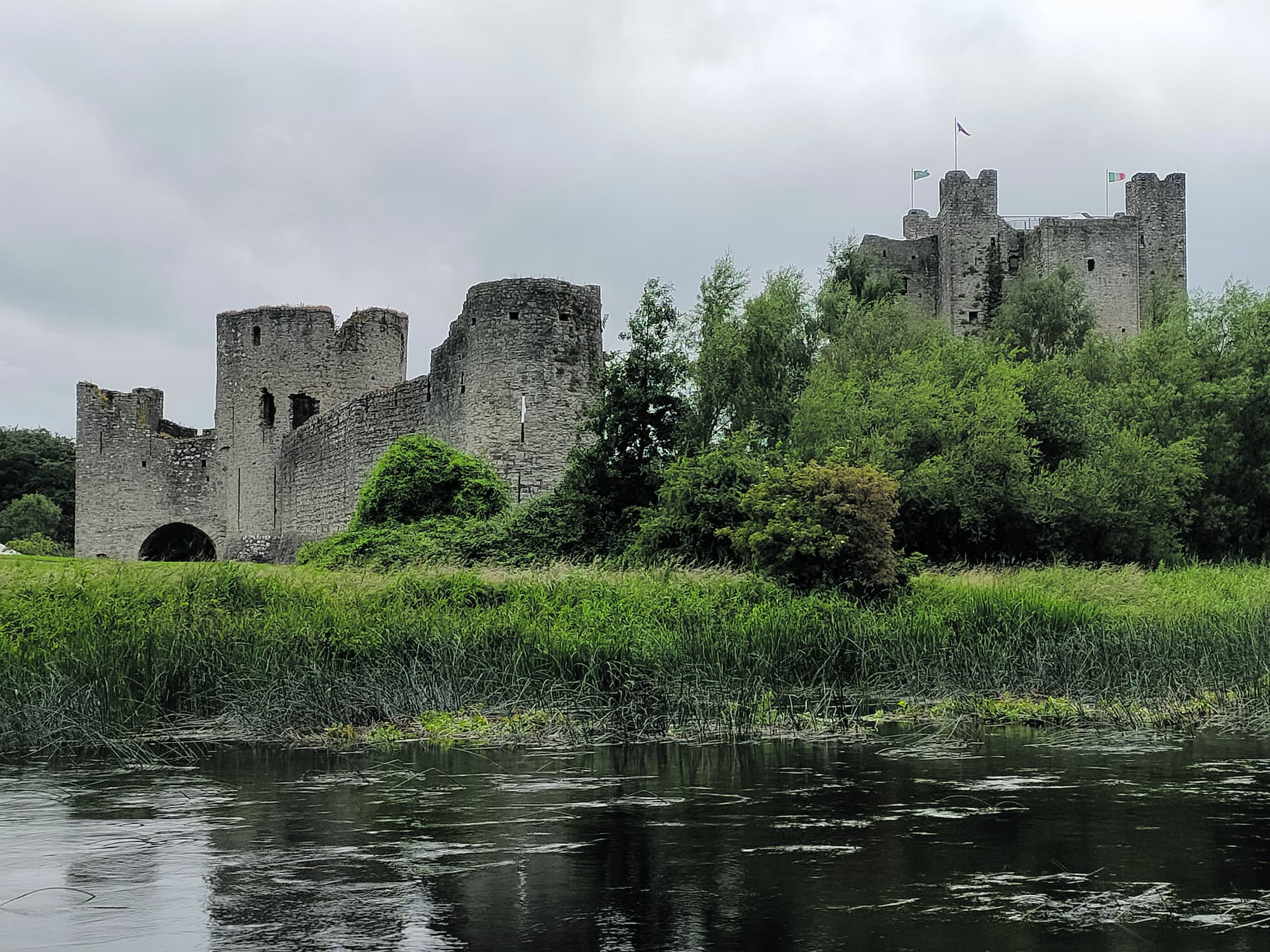

Trim castle, since its construction 800 years ago, has helped Trim town build itself up and gain a reputation as one of Meath’s most well-known tourist towns. A lot of the shops and buildings close to the castle’s vicinity will have a similar brick design as the town doubles down on its historical roots.
The castle was first constructed shortly after the arrival of the Anglo-Normans in 1172 by Hugh de Lacy over the course of 30 years. It was attacked shortly after this and rebuilt with stone and a curtain wall, a castle gate, moat, and stone keep, most of which was completed in 1220. The castle changed into different royal family’s hands over the next few hundred years before being seized as British royal property in the 15th century. Its role in the 1996 Braveheart movie as a location for many scenes in the film is also the reason for Trim’s notoriety and growth in tourism both local and from abroad. Not only did the movie give Trim the means to grow in fame, the funds garnered for allowing shooting at the castle helped a small village grow into the town it is today.
The castle is not the only location for tourists, however, as there are walks surrounding its walls and river with some leading into open fields for all to use. Parks and smaller historical monuments are littered close by and even at other areas of Trim for people to discover. Even when not considering the inner Trim castle, Trim is a perfect location for anyone looking for a location to have a long, leisurely stroll with interesting pieces of mediaeval history, both big and small.

What makes Trim castle unique among Ireland’s vast collection of mediaeval architecture is not just the fact it is the largest Anglo-Norman castle in Ireland, its strange design is unlike others built at the time. It is the only Norman keep in Ireland with a cruciform shape in Ireland and the unique structure can be seen clearly from the outside. The lack of wooden flooring allows for all three floors to be viewed at once with small but noticeable details revealing the history behind every corner and crevice. For example, one of the second floor rooms had gaps built in a way to make it harder for arrows to get through and was in a scene in Braveheart. It was also where the mediaeval equivalent of a toilet was, shown by a rectangular hole going straight down.
The tour costs 5 for adults, 4 for seniors, and 3 for children with tours going hourly from 10am to 5pm seven days a week. Every other aspect is free, however, with only the actual castle requiring a paid ticket for. The tour is almost necessary for those invested in Irish and mediaeval history as it goes into great depth about the castle’s past which in turn sheds light on what was occurring in Ireland as a whole. I would not recommend this trip for anyone with a mobility disability or difficulty walking, however, as the stairs are difficult for anyone to traverse due to it being designed as a way of slowing any attackers invading the castle.
Its outer gates can be seen from far off in the distance and its outer walls are something to be explored in themselves. Despite obvious ageing and parts lost to time, its walls and outer towers are still a site to behold from both far off past its man-made moats and up close with small historical details littered across its perimeter. Trim is also home to many other sites such as Wellington monument, Maudlin’s cemetery, Newtown cathedral, and many others scattered across the town. An entire day can be spent touring every inch of Trim with its designation as a heritage town being well earned.
Visiting Trim castle alone is a good way to spend a few hours as there is plenty to see both in and around its castle gates. It may be more enjoyable, however, to journey across town and discover other historical locations and architecture littered across the town.