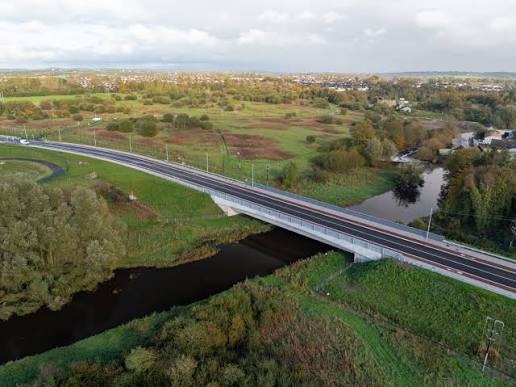

Slane is a village with a small population of only around 1,500. The positioning of this village is what brings a number of visitors to the local areas. Slane stands on a steep hillside neighbouring the River Boyne, and is filled with an array of B&B’s and lodgements of all sorts. The area that surrounds the village overflows with monuments and souvenirs of the past, some dating back 5,000 years. The Hill of Slane stands out as a prominent destination for those who are interested in Irish history.
Nestled in the heart of Slane, the Hill of Slane beckons exploration, accessible by foot or by car. The peak of the hill provides a large parking lot lined with bins and benches to sit and take in the view. Starting at the road and path uphill, the route unfolds the panoramic views of Slane from an elevation of 158 metres. A fun fact, during clear skies the Hill of Slane can be seen from Hill of Tara which is located 16 kilometres away.
The grounds are steeped in legend as the final resting place of the first King of Ireland, Sláine Mac Dela. Sláine, the leader and the first ruler of the Fir Bolg people. The Fir Bolg people were mythical early invaders of Ireland, embarked on a journey escaping Greece following decades of slavery. They began their adventure in a boat crafted out of leather bags which became their vessel of liberation. This burial marks just one of many historical events that occurred on the Hill of Slane and its surroundings.
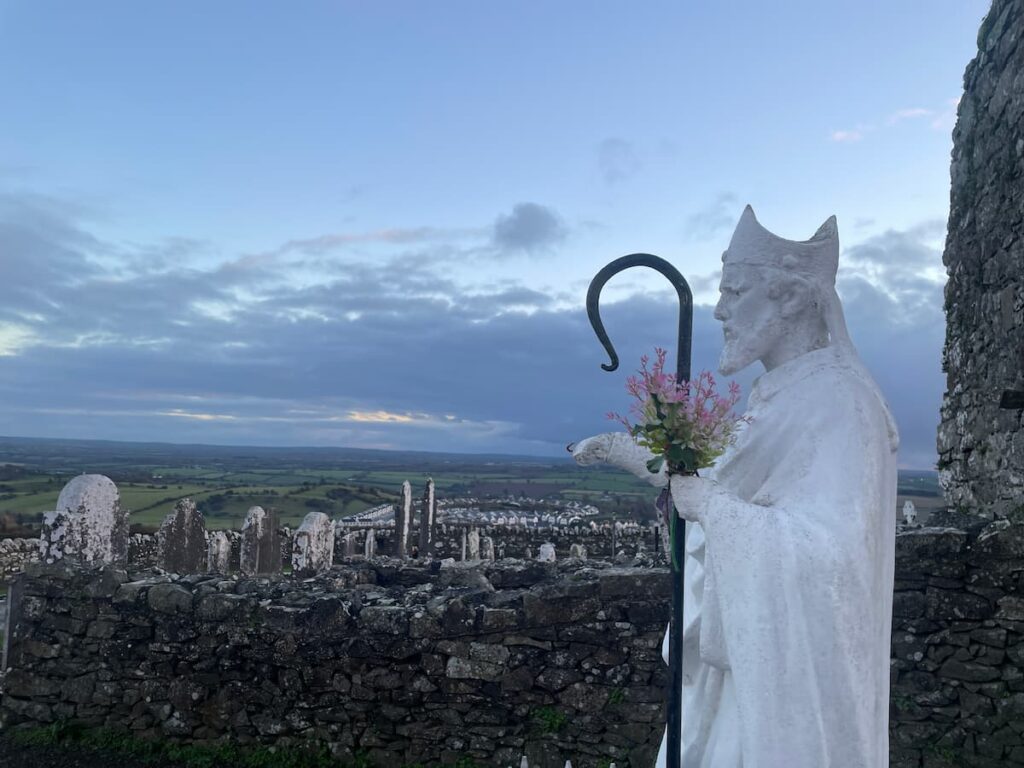
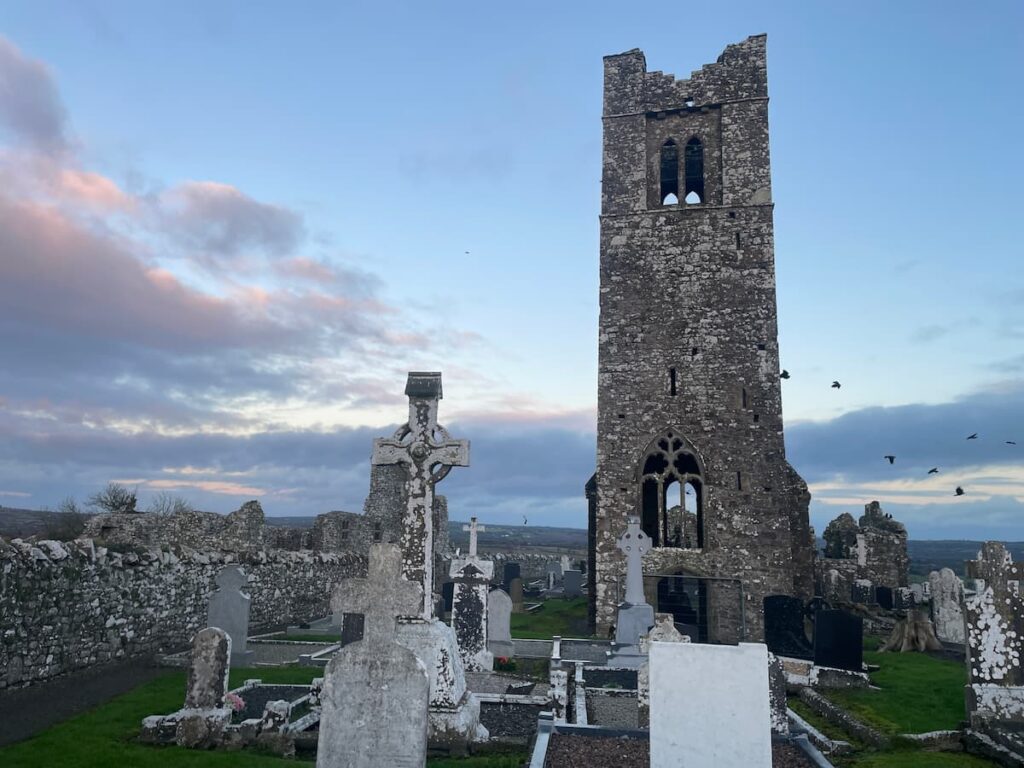
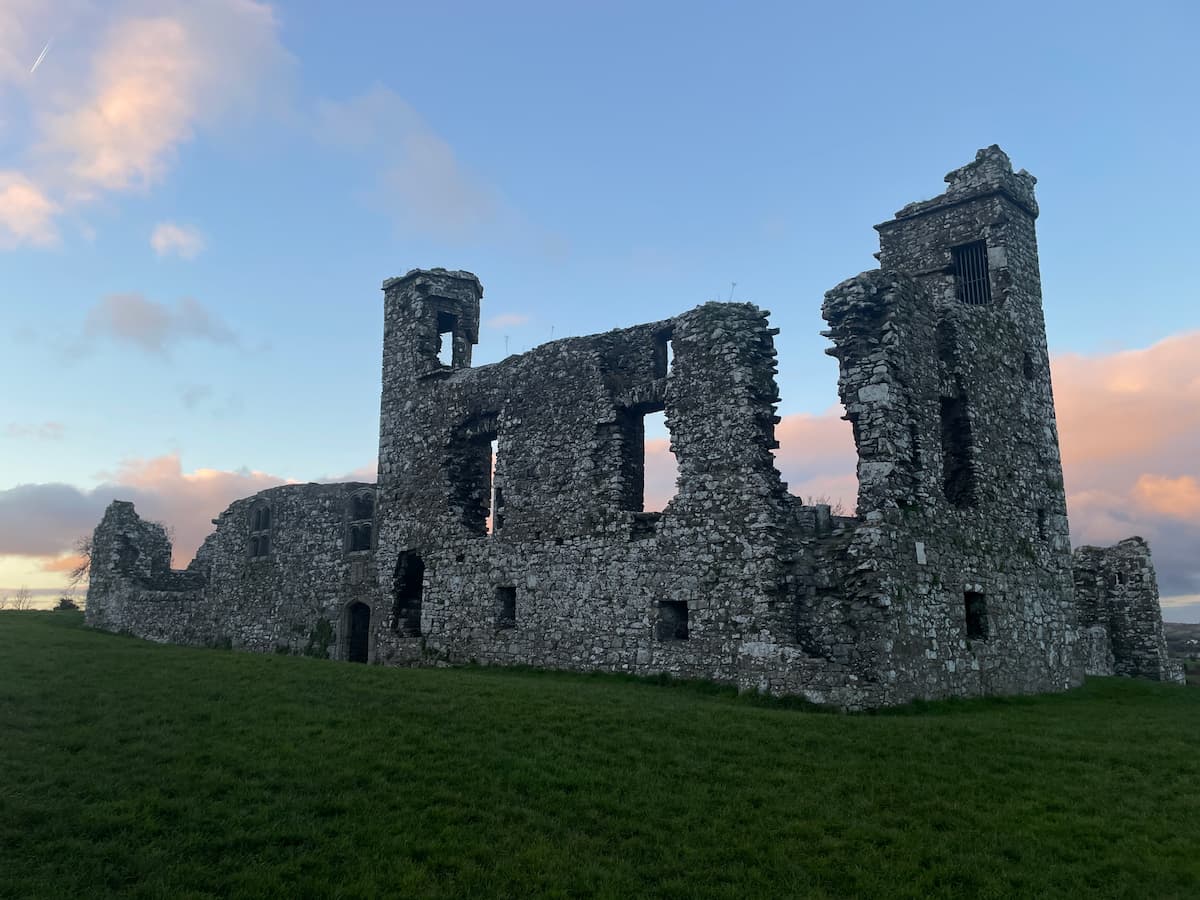
The Hill of Slane was the centre of Christianity and knowledge for many centuries, beginning with Sláine and Saint Patrick. Initially it was thought that St. Patrick lit the Paschal Fire at Easter 433 on the Hill of Slane although archaeologists now believe that this could have occurred anywhere in the Boyne Valley. The association with Saint Patrick led to the building of a medieval Church of Saint Patrick which served as a local parish until the 18th century. It is now guarded by a statue of Saint Patrick, the patron saint of Ireland, which overlooks the grounds.
The College was built right beside the Church by the Barons of Slane, and it was the centre of all of the parish’s work and at one point housed four priests, four choristers and four lay-brothers. The Fleming family founded the Church, and used it to proudly showcase their coat of arms which can still be seen today although not in its original place. The building has been maintained well and many of the features of the building are as they were centuries ago such as the staircases, windows and fireplaces.
The Hill of Slane invites both locals and visitors to explore its scenic grounds and wander freely. Dog-friendly, free of charge, with conveniently placed bins and benches for walkers, it provides a welcoming environment for all. A spread of benches can be found on the road up the hill as well as on the peak of the hill. A serene spot to admire the panoramic views of Slane. However, be cautious that some surfaces of the ruins can be slippery after rainfall and the narrow entrance gate may cause issues for buggies and wheelchairs. The Hill of Slane is a place of natural beauty and historical intrigue that provides an enriching experience for all who visit.